Rail Travel · Planning Europe · Travel Tips
Europe by Train: What First-Time Travelers Need to Know
When the train beats flying, whether a rail pass is worth it, and the luggage problem nobody warns you about until you're carrying it up a staircase.
European trains are genuinely one of the best things about traveling there, and they are also where first-time visitors make the most avoidable mistakes. Here's what's worth knowing before you book anything.
The rule for train versus plane
If the train takes under about five hours city center to city center, take the train. Almost without exception.
A short European flight is not a short journey. Two hours before departure, an airport that isn't in the city, security, boarding, another airport that also isn't in the city, and the transfer in. Six to seven hours door to door for a "one hour flight."
Trains that beat flying comfortably:
| Route | Train time |
|---|---|
| Paris → London | ~2h20 |
| Rome → Florence | ~1h30 |
| Florence → Venice | ~2h |
| Paris → Avignon | ~2h40 |
| Madrid → Seville | ~2h30 |
| London → Edinburgh | ~4h30 |
| Paris → Barcelona | ~6h30 |
That last one is over five hours and still usually worth it, because the alternative involves two airports and you'd spend the time anyway.
Your reservation matters more than your ticket
This is the thing that catches people out.
On the high-speed services in Italy, France, and Spain, a seat reservation is compulsory and separate from the ticket. It is not optional, and a train can be sold out of reservations while tickets are still notionally available. Turning up with a valid ticket and no reservation on a Frecciarossa or a TGV is not a gray area; you don't travel.
Germany, Austria, Switzerland, and the Netherlands are the opposite: reservations are optional on most services, and you can genuinely walk up and board.
Rail passes: usually not
The romance of the rail pass rarely survives the arithmetic.
A pass makes sense if you are moving frequently, over long distances, in countries where reservations are optional; a month zig-zagging through Central Europe, say. For the trip most people are actually taking, it doesn't.
Two reasons. First, point-to-point advance fares in Italy, France, and Spain are often dramatically cheaper than the pass. Second, and this is the part that stings, in those same countries you still pay for a compulsory seat reservation on top of the pass, and the reservation allocation for pass holders is limited. You can end up having paid for a pass and still be unable to get on the train you wanted.
For a two-week trip with four or five train journeys, buy individual tickets.
When to book
Tickets typically go on sale three to six months before travel, and the cheapest fares sell first. Prices climb steeply as departure approaches; a fare that was €29 four months out can be €120 the week before.
You cannot book nine months out. Put a note in your calendar for about four months, which is the sweet spot: the schedule is loaded, the cheap fares are live, and nothing has sold out.
Advance fares are usually non-refundable and non-changeable. Flexible fares cost more and are worth it on the one leg where a missed connection would wreck the trip.
The luggage problem
Nobody warns you about this and it shapes what you pack.
There are no porters. There is often no lift. Regional stations in particular have long staircases and underpasses between platforms, and you will carry everything you brought up them, twice, in a hurry, sometimes in the rain.
On board, there is no dedicated baggage car. Large cases go on racks at the carriage ends, out of sight of your seat, or overhead; which means lifting them above your head.
The practical version: one case each that you can carry up a flight of stairs unassisted, plus a small bag. If you can't lift it, it's the wrong case. This is the single strongest argument for packing light on a European trip, stronger than any airline allowance.
Practical things that make it painless
- Platforms are announced late. Ten to twenty minutes before departure at big Italian stations. Don't panic, but be in the hall watching the board rather than sitting in a café around the corner.
- Validate paper tickets where machines exist; in Italy, an unvalidated regional paper ticket carries a fine. E-tickets on your phone don't need it.
- First class is often a small upgrade on high-speed routes and buys a quieter carriage and more space. On a five-hour leg it's usually worth it; on ninety minutes it isn't.
- Leave real time for connections. Twenty minutes at an unfamiliar station with luggage is not enough. Forty-five is comfortable.
- Sit on the right side heading south along the Ligurian coast between France and Italy. The sea is worth it.
Where the train stops making sense
Trains are excellent between cities and poor at reaching countryside. Tuscan hill towns, the Cotswolds, Provençal villages, the Highlands; these need a car or a driver. The pattern that works on most trips is train between the bases, car only for the rural stretch, dropped before the next city.
If you want to know whether your route holds together, the connections, the reservations, whether a leg is worth flying instead, that's exactly what I do. Tell me where you're going.

Kerry-Ann Stephens
Founder of Bound for Europe, based in Georgetown, Texas. She plans custom European trips and hosts small-group retreats for women.
Destinations in this article
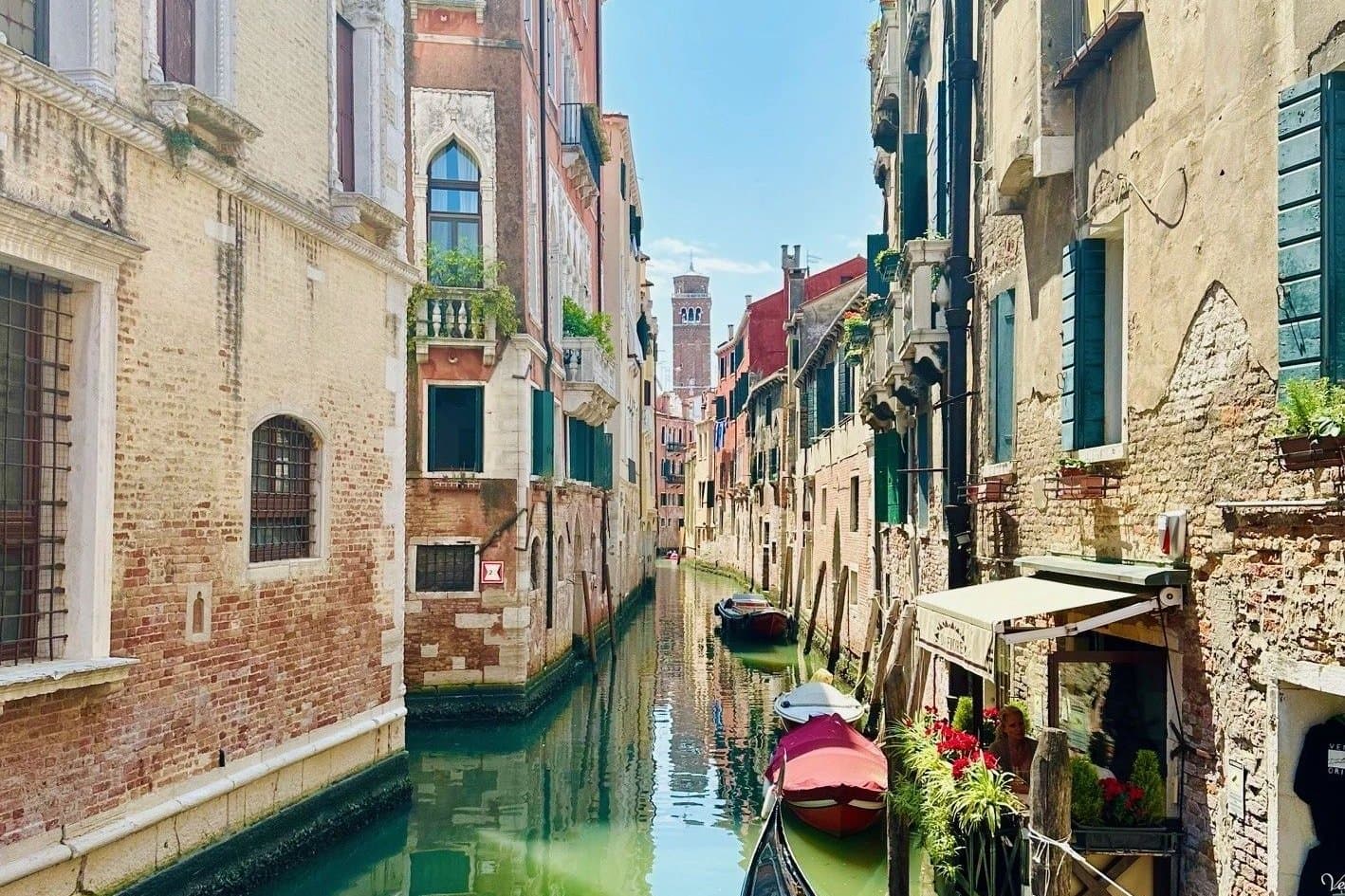
Italy
The country most people try to see all of in ten days; and the one that rewards you most for not doing that.

France
Everyone plans Paris. The trips people talk about afterwards are the ones that left the city for a few days.

England
The easiest country in Europe to travel badly, because everything looks close on the map.